How to Calculate Company Car Tax
13th Nov 2026
Company cars are often a perk of the job, but you need to consider the tax implications when running one. So, before you sign up for a company car, it's worth understanding the rules on benefit-in-kind (BIK) tax, also known as company car tax, so you can make an informed decision about which make and model suits you best.
This guide will show you how to calculate company car tax and explain what each of the key terms, like P11D value and BIK, mean, and how opting for a lower CO2 emissions powertrain such as all-electric and plug-in hybrid (PHEV) vehicles can be beneficial and reduce the overall tax bill.
What is company car tax?

Benefit-in-kind (BIK) is a non-cash benefit or perk provided by an employer, such as a company car, private medical insurance, or a gym membership, that's additional to your salary.
So, when your employer provides you with a company car that's also available for private use, you'll have to pay what is commonly known as company car tax, or a benefit-in-kind (BIK) tax, which applies to the taxable benefit associated with the vehicle, including commuting and other private journeys.
The amount of company car tax you pay depends on factors such as the car's list price from new, the CO₂ emissions (BIK percentage) and your income tax rate. The BIK percentage is largely determined by the vehicle's CO₂ emissions and fuel type, with different rates applying to all-electric, plug-in hybrid, full hybrid, petrol and diesel cars. For plug-in hybrids, the vehicle's electric-only range can also affect the applicable BIK rate. The BIK percentages also depend on the relevant tax year.
How is company car tax calculated?
To calculate company car tax, you need three different figures. Your income tax band, the vehicle's P11D value, and the BIK percentage based on CO2 emissions. Multiply the car's P11D value by the BIK percentage, then by your income tax band, to calculate the annual company car tax you need to pay.
Multiply the car’s P11D value by the BiK percentage rate to get the taxable value (or BIK value). Then multiply that by your income tax rate to calculate the total tax you’ll pay for the year.
Find out your income tax band for 2026/2027
Your income tax band depends on how much you earn annually. The more you earn, the more income tax you will pay. Below are the current 2026/2027 tax bands.
|
Band |
Taxable income |
Tax rate |
|
Personal Allowance |
Up to £12,570 |
0 percent |
|
Basic rate |
£12,571 to £50,270 |
20 percent |
|
Higher rate |
£50,271 to £125,140 |
40 percent |
|
Additional rate |
over £125,140 |
45 percent |
Identify the P11D value of the car
To identify the P11D value, you need the vehicle's list price, including any optional extras or upgrades, and the delivery charges. However, it does exclude any road tax or registration fees. The P11D value is used to calculate the taxable portion of the car's full value.
Apply the BIK percentage based on CO2 emissions
For each tax year, HMRC sets BIK percentage rates based on the CO2 emissions the company car produces. This can range from zero emissions for all-electric cars to petrol- and diesel-powered vehicles, which tend to have higher CO2 emissions.
It also takes into account the electric-only WLTP range of plug-in hybrids, with different values for those with longer ranges than those with shorter ranges. Below is a table to calculate the BIK percentage of your company Car.
Petrol-powered and hybrid-powered cars for the tax year 2026 to 2027
|
CO2 emissions (g/km) |
Electric range (miles) |
BIK (percent) |
|
0 |
N/A |
4 |
|
1 to 50 |
130+ |
4 |
|
1 to 50 |
70 to 129 |
7 |
|
1 to 50 |
40 to 69 |
10 |
|
1 to 50 |
30 to 39 |
14 |
|
1 to 50 |
less than 30 |
16 |
|
51 to 54 |
N/A |
17 |
|
55 to 59 |
N/A |
18 |
|
60 to 64 |
N/A |
19 |
|
65 to 69 |
N/A |
20 |
|
70 to 74 |
N/A |
21 |
|
75 to 79 |
N/A |
21 |
|
80 to 84 |
N/A |
22 |
|
85 to 89 |
N/A |
23 |
|
90 to 94 |
N/A |
24 |
|
95 to 99 |
N/A |
25 |
|
100 to 104 |
N/A |
26 |
|
105 to 109 |
N/A |
27 |
|
110 to 114 |
N/A |
28 |
|
115 to 119 |
N/A |
29 |
|
120 to 124 |
N/A |
30 |
|
125 to 129 |
N/A |
31 |
|
130 to 134 |
N/A |
32 |
|
135 to 139 |
N/A |
33 |
|
140 to 144 |
N/A |
34 |
|
145 to 149 |
N/A |
35 |
|
150 to 154 |
N/A |
36 |
|
155 to 159 |
N/A |
37 |
|
160 to 164 |
N/A |
37 |
|
165 to 169 |
N/A |
37 |
|
170 and above |
N/A |
37 |
Examples of Company Car Tax Contributions
Example One
- Company car: All-electric SUV
- P11D value: £45,000
- BIK rate 2026/2027: 4 percent (Zero emissions)
- Personal income tax rate: 40 percent
- Step 1: £45,000 (P11D) x 4 percent (BIK rate) = £1,800 (BIK value)
- Step 2: £1,800 (BIK value) x 40 percent (income tax rate) = £720 annual company car tax payable
Example Two
- Company car: Plug-in Hybrid SUV with 35 miles electric-only range
- P11D value: £30,000
- BIK rate 2026/2027: 14 percent (Based on electric-only range)
- Personal income tax rate: 20 percent
- Step 1: £30,000 (P11D) x 14 percent (BIK rate) = £4,200 (BIK value)
- Step 2: £4,200 (BIK value) x 20 percent (income tax rate) = £840 annual company car tax payable
As the examples above demonstrate, even a more expensive all-electric car driven by a higher-rate taxpayer can result in a lower annual company car tax bill than a cheaper plug-in hybrid (PHEV) driven by a basic-rate taxpayer. This highlights how the vehicle's C02 emissions and your personal income tax band can affect the overall tax you pay.
Understanding P11D Values
The P11D value of a company car is its officially recognised list price, usually found on the manufacturer’s official website or an authorised dealership such as Evans Halshaw. This includes all the optional extras and delivery charges.
For example, if you've opted for the panoramic roof as an optional extra on the base model, you must add that cost to the officially recognised list price.
One thing to note is that road tax or registration fees are excluded from the P11D value and should not be included in the final number.
What impact do electric and hybrid vehicles have on company car tax?
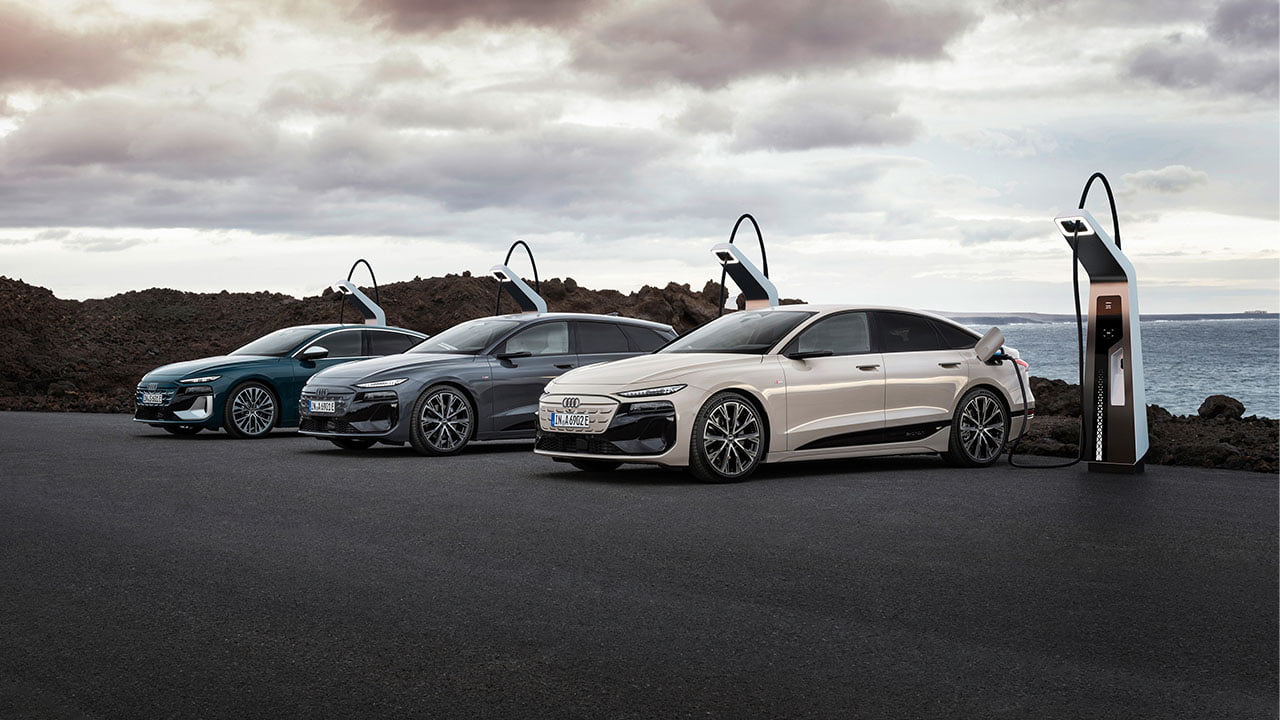
One of the best ways to reduce the company car tax you pay is by opting for an all-electric or low-emission car, such as a plug-in hybrid. All-electric cars, currently have the lowest BIK percentage rate. Plug-in hybrids (PHEV) also have a low tax rate, which depends on the car's WLTP electric-only range.
Full hybrids, petrol, and diesel cars tend to have a higher BIK percentage rate, which depends on the CO2 emissions they produce, with the BIK percentage going higher up to a maximum of 37 percent, which is current for the 2026/2027 BIK percentage rates.
For those who want to keep company car costs to a minimum, and if you have the space at home or work for charging infrastructure, choosing an all-electric or PHEV hybrid is the best choice. It's also about balancing electric range with how much distance you drive.
If you're on the road a lot and doing long miles, selecting a PHEV or full hybrid over an EV might offset the costs of stopping to charge all the time, which can eat into valuable productive working time and overall business efficiency.
What could this look like for your business?
Although the employee pays the company car tax, usually as an adjustment to their PAYE tax code, the employer pays Class 1A and 1B National Insurance on expenses and benefits they give to their employees. This includes a company car. The current rate from 6 April 2026 to 5 April 2027 on expenses and benefits is 15 percent. Employers may need to submit a P11d form to those benefits in line with HMRC requirements.
As an employer, it's also worth considering that, with a company car, you're usually responsible for insurance, maintenance, servicing, fuel, and financing costs.
Something else to consider with company car tax are the changes set to come in the following years. Particularly if you are considering a vehicle on a longer-term agreement. The government has confirmed the future for Benefit in Kind rates, helping to give drivers and businesses greater certainty when planning ahead.
For zero-emission cars the BIK rate will rise gradually reaching 9 percent in 2029/2030. While rates for other emissions bands will also increase. From 2028/2029, including qualifying plug-in hybrid vehicles producing between 1g/km and 50g/km of CO2 will move to a single 18 percent BIK regardless of electric only range, eventually rising to 19 percent BIK in 2029/2030.
Frequently asked questions
Benefit in Kind (BIK) is a benefit an employer provides in addition to an employee's salary. A common example is a company car that can be used for private use, including commuting or a gym membership. BIK tax is often called company car tax when related to a company car.
The amount of tax payable depends on the vehicle's P11D value, C02 emissions and the employee's income tax band. Electric vehicles have the lowest BIK rates, making them a popular choice for those who need or are offered a company car.
A company car can be beneficial, especially if your employer covers insurance, servicing, road tax, and fuel (if applicable), saving you the expense and responsibility of running your own vehicle.
However, you will need to consider the additional Benefit in Kind tax, also known as company car tax. Opting for an all-electric or PHEV company car can keep BIK tax rates low.
Whether a car allowance or company car is better depends on your finances, personal preferences, and driving habits. A car allowance provides additional taxable income while offering more freedom to choose your own car. However, you are responsible for the insurance, servicing, everyday maintenance, fuel, and any finance costs.
Choosing a company car offers convenience, with many running costs, such as servicing and insurance, covered by your employer. It can also be more tax-efficient than taking a cash allowance where a vehicle with a low Benefit in Kind rate is available, such as an all-electric car. Comparing the overall cost of both will help you decide which option is best for your work and everyday circumstances.
How to calculate company car tax and keep your costs down

Understanding how to calculate company car tax can help you make an informed decision when choosing your next company car. By considering the P11D value (list price plus extras, upgrades, and delivery), the Benefit in Kind (BIK) percentage, and your personal income tax band, you can calculate your BIK tax rate. This will help you decide on the model, make, and powertrain type; comparing company car tax rates before you decide could save you money in the long run.
At Driveway Vehicle Solutions, we offer a range of Business Contract Hire and Salary Sacrifice solutions to help businesses and employees access the best vehicles for their needs. From managing your business fleet to exploring tax-efficient electric vehicle salary sacrifice schemes, our team can help you understand your options and find the right solution.
You can estimate your company car tax for the next few years by speaking with our Driveway Vehicle Solutions team or taking a look at the information provided by the HMRC Car Tax Calculator.